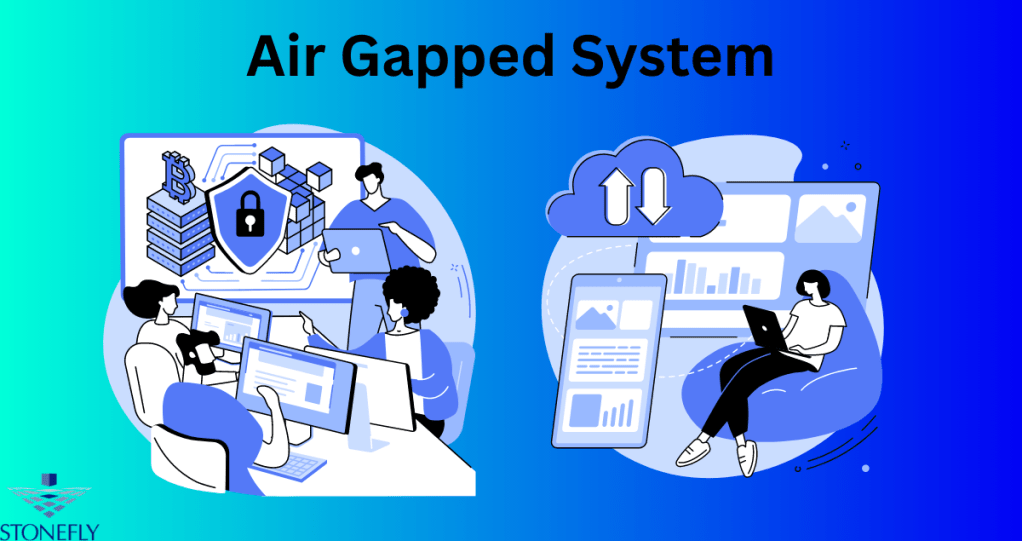
A system that is air gapped, also known as a “disconnected” or “standalone” system, is one that has been intentionally isolated from any other external networks. This means that the network has no direct connection with the internet or any other similar networks and can only be accessed by physically connecting a device such as a laptop or USB drive. This makes it much harder for malicious actors to access the system, making air gapped systems highly secure and an attractive option for many organizations.
What is an Air Gapped System?
An Air Gapped System is a type of network where computers and other connected devices are completely isolated from the internet or any other external networks. This means that all data stored on the system can only be accessed by physically connecting a device such as a laptop or USB drive. There are two main types of air gapped systems: completely air gapped and partially air gapped. With a completely air gapped system, no incoming or outbound communications are allowed. This type of system is often used in high-security organizations such as government agencies or military facilities.
Types of Air Gap Backup
Off-site Backup: This type of backup involves making a copy of the data stored on one system and storing it at an alternate site, usually in the cloud.
Local Backup: When using local backup, all data is stored locally on a device such as a hard drive or USB drive. This makes recovery times faster but requires physical access to the device if something goes wrong.
Hybrid Backup: A hybrid backup combines both off-site and local backups, allowing for quicker recovery times while also providing an extra layer of security.
Advantages of Air Gap Systems
- Security: Air gapped systems are much more secure than traditional internet-connected networks because a malicious actor would need physical access to the system in order to compromise it.
- Privacy: By isolating data from any other external networks, air gapped systems provide an additional layer of privacy and help ensure that sensitive information remains confidential.
- Cost Savings: Air gapped systems are much more cost effective to maintain than traditional networks, as they require less hardware and infrastructure.
- Reliability: Air gapped systems offer a greater level of reliability, as there is no risk of an unexpected outage or disruption due to external factors such as internet connectivity issues.
Conclusion
Air gapped systems offer a number of advantages for organizations in terms of security, privacy, cost savings, and reliability. While air gapped systems are more secure than traditional networks, they do require physical access to be compromised. Therefore, it is important to ensure that the system is properly secured and that only authorized personnel have access to the data stored on it.
FAQs
How do I access an air gapped system?
In order to access an air gapped system, you must physically connect a device such as a laptop or USB drive to the network.
Is an air gapped system more secure than a traditional network?
Yes, air gapped systems are much more secure than traditional networks because they require physical access to be compromised. This makes them attractive for organizations that require a high level of security and privacy.

 Cloud Backup services